I came to faith in college and God soon gave me a hunger to know his Word and understand theology. Back in the 90s there was a little Christian bookstore in my college town and I remember purchasing this behemoth.
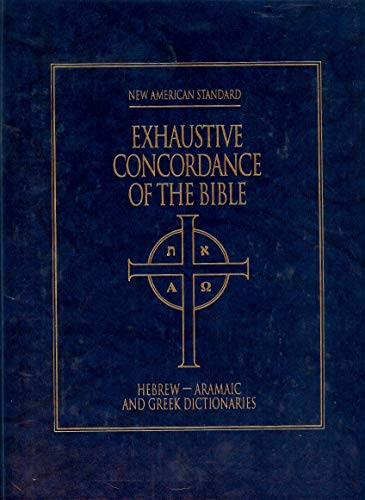
I think it weighs more than five pounds. But I loved this thing and eagerly scoured its pages looking for insights into the Scripture that I thought were hidden in the English translations. “What did the Greek and Hebrew really mean?” This concordance was going to give me the answers.
Fast forward about 30 years and I find myself on the other side of three semesters of Hebrew in seminary. Those first few classes were like being thrown into the deep end of a pool and I could barely keep my head above water. It didn’t help that the class was held from 6-9 pm. Who can learn an ancient language effectively at night!? I remember coming home after that first class, bleary eyed and dejected, not even understanding how the letters of the alphabet were formed. If I couldn’t recognize the difference between a dalet (ד) and a resh (ר) how was I going to do this? A couple students dropped out after that first class, but about seven of us kept going, soon getting used to leaving a lecture completely lost, but assured that our understanding would catch up in a couple weeks. Hopefully.
The learning curve was steep, but in the beginning of learning, excitement and discovery can be intoxicating. You may think you’ve been given a secret key to unlock deeper meanings. However, the author of our textbook, William Fullilove, wisely warns the beginning student – “A little knowledge of Hebrew can be a dangerous thing!”
As I’ve advanced in my language learning, I’ve seen how complex and serious a task it is to translate the Bible from its originals languages. There are many internal scholarly debates that a layperson has no knowledge of. You may learn one aspect of the Hebrew verbal system but there are six others! Do you know how each of them operate? Do you realize that Hebrew has changed over time and so sometimes later texts in the OT use the language in different ways than earlier texts?
That behemoth of a concordance helped me in many ways, especially before the advent of computer technology and sophisticated Bible software. But to think that I could accurately understand the meaning of a Hebrew word from the list given to me at the back of the book was naive at best. It’s not a matter of seeing the various choices and picking which one I like best. Word meaning is determined from the surrounding literary context among many other factors.
The other night I was chatting with my Hebrew professor after class and I admitted that I still felt like I was in kindergarten regarding my understanding, even after three semesters of the language. He graciously offered, “I think you could consider yourself in fourth grade.” I can take a little comfort in that remark, but am still humbled by how complex and beautiful this language is. There is still so much to learn.
Trust the translators. They have done a great job. And if you will never learn Hebrew or Greek, the best thing to do is work with several translations that seek to stay as close to the original as possible – NASB, ESV and NIV. Compare these and trust that the Word of God has been preserved and he is still speaking.
 Women Studying the Word